It’s alive!

The Viper had his first practice with the Famous Orchestra since 2002 on Sunday, June 14. It sounded surprisingly good, and I think we’re going to sound really good by the time of our mid-July shows. I’m going back for more later this morning.

The practice included me, trombonist Rob Henn, and bass player Riley Broach. We practiced at the lovely 1866 home of Riley and Therese Peskowits in Palatine, IL. And here’s what we practiced:

  • Randolph St.
  • I Left My Liver in Libertyville
  • Heyse Latke Kalte Latke
  • Winnebago Bay
  • The Fillmore and Buchanan March
  • The Neapolitan
  • Seafaring Lassie
  • Whispering
  • Good Morning Irene
  • Ich Bin Berlin
  • Drunk Bus
  • Benny Lava

My seafaring lassie will smile on the Bard of Armagh

"Bard of Armagh" ballad sheet

In putting together 5 shows for the summer that will require two complete sets, and doing it with an Orchestra that resides, Famously, in 6 different cities in 3 different states, I’m spending a lot of quality archive time digging through old file folders (manila and electronic) and old hard hard drives to dredge up or create reference material — lyric sheets, chord sheets, lead sheets, arrangement notes, scratch recordings, etc. — that I can pass on to everyone else via email and, now, via the wiki I’ve started putting together for the summer for just this purpose.

Thankfully, the rest of the Famous Orchestra appears to suffer from the same archive fever that I do. And now all kinds of great material is starting to show up on the wiki: lyrics to Tre-P’s “Drunk Bus” contributed by Ed Burch, chord changes for “Winnebago Bay” and other songs contributed by Riley Broach. And this: a page of sprawling handwritten notes for “My Seafaring Lassie,” developed in situe as we were pulling together this then very fresh piece of hardtack for a couple of shows during the summer of 2002 (I’d finished writing the song on the treadmill on the cargo ship on which my wife and I crossed the Atlantic Ocean on our move back from Turkey just weeks before).

Here’s the notes:

Seafarin’-transcript.pdf

And, just for reference, here’s a recording of “My Seafaring Lassie” from a solo show I did in December 2008 at the Home Grown Coffee House in Accokeek, Maryland:

http://theviper.wikispaces.com/file/view/seafaring-lassie.mp3/77638953
(click here to download the mp3)

The contributor of the notes is Rob Henn, as will be apparent from what he calls the “admittedly trombone-centric (but still helpful!)” transcription of this arrangement. What I really like is the economy of these notes — there’s a lot being recorded here, and it’s a little bit of a fly thing all on one page: everything from the basic structure of the song, to snatches of lyrics, notes on vocal harmonies and punctuation, built-in contingencies for live playing (all those question marks!), bits of melody transcription, and references to inside jokes (such as our use of the “Picardy 3rd” to end the song).

At the tail end of the piece, you’ll also see:

Assorted phrases, Irish brogue talkin’, whatever…
— On my signal, I sing, “And she’ll smile on the bard of Armeagh! (Armeagh!)”
All, very lock-step in rhythm, “And she’ll smile on the bard of Armeagh!”

This was about as inside as jokes get. It could be excused only by the vaguely Irish (though, truthfully, English West Country) feel of the song. And the joke was basically this: Rob Henn had once had a dream in which, I think, The Viper and His Famous Orchestra were playing; and we either had to sing, or were watching, some Irish music performance in which the “bard of Armeagh” line cited in the “Seafarin’ Lassie” notes were sung. Rob had vividly remembered the lyrics, the melody, and the end-of-chorus turnaround from his dream, and so was sufficiently astounded some weeks later, while at the Hideout in Chicago, to discover a flyer for an upcoming performance BY the Bard of Armagh, which turned out to be the moniker sometimes applied to the late and great, hearty and hellish Tommy Makem — though I can’t believe it was actually Tommy Makem who was coming to the Hideout.*

So — to rip off Peter Stampfel here — we put it in the song! And sang it! And closed the song with it! Hurrah for The Viper and His Famous Orchestra! Hurrah for Rob Henn! Hurrah for Isaac the Bartender! And Hurrah for the Bard of Armeagh!

* Though a quick search turns up that Tommy Makem was, in fact, scheduled to play in Chicago’s Irish American Heritage Festival in July of 2002. And, in fact, “The Bard of Armagh” turns out to be an actual Irish ballad about a travelling 17th-century harper named  Phelim Brady, recorded at least once by Tommy Makem, and — the resonances start to pile up pretty thick here — set to the tune used by a song occasionally performed by The Viper, “The Streets of Laredo,” though there is no “smiling upon” going on in either song)

Das Kapital 2.0

Ask not what The Viper can do for you: ask what you can do for The Viper. And today, The Viper is asking you to contribute some of  late capitalism’s current favorite euphemisms.

One of the songs we’ll be playing at our shows this summer is our old standby, “Das Kapital,” which boils down Karl Marx’s three volumes and 150 years of marxist theory into 3 minutes and 24 seconds of vaudeville patter with a structure borrowed (shall we say “liberated”?) from The Music Man‘s “Trouble in River City” song. That’s trouble with capital “T” and that rhymes with “C” and that stands for “Capital.” Here’s what it sounded like:


click here to download the mp3

Well, it’s 10 years since we recorded this song for our Everything for Everyone CD. And some of the bits in the lyrics that were supposed to sound like crazy ranting seem scarily uncrazy now. In fact, we’re going to have a hard time keeping up with reality.

And this is where you come in. I need your help in bringing up to date the middle “trouble, trouble, trouble” part that starts at 1:58 in the recording above. This is where, like Harold Hill, I ask if the audience has noticed that in their son or daughter’s speech, “certain words [are] starting to creep into their conversation, words like…”  And then I list some of the current “anglo-saxon monosyllables” of which James Agee (in an appendix to Let Us Now Praise Famous Men) once noted that “a careful man will be watchful of, and by whose use and inflection he may take clear measurement of the nature, and the stature, and the causes, and the timbre, of the enemy.” On the recording above, these were, for summer of 1999: “the new economy,” “labor shortage,” “wage inflation,” and “reformer with results.”

I’ve started a list below for 2009, that might include:

  • toxic assets
  • derivatives
  • too big to fail

Now, it’s time for you to add your favorite words and phrases. Either send these as comments or, even better, type them directly in the wiki page I’ve created for this song at http://theviper.wikispaces.com/kapital (you’ll just click the “edit” button you’ll see on the top of the page, then save when you’re done). The death of the reader is the birth of the contributor.

Hotter latkes

Regular readers of this space will recall eight straight nights of posts last December devoted to my attempt at writing a Hanukkah song, “Heyse Latke Kalte Latke.” At that point, I didn’t yet have an electronic-transmission-friendly version of the lead sheet reflecting the slight tweaking that violinist Peter Jensen and I had given the tune since I first scrawled my handwritten version of the melody some months earlier.

Well, I finally broke down and bought me some music notation software — the formerly free Finale NotePad, now $9.95 in its 2009 edition. With the reconstituted Viper and His Famous Orchestra doing some shows later this summer, and with the limited time we’re going to have to actually all be in one place at one time to practice, I needed some way to make distance rehearsal more doable. I made “Heyse Latke Kalte Latke” my test case for the software, and I’m pretty happy how easy it was to figure out and getting something down quickly with even this cheapest version of the Finale line.

I’ve saved the result here for download, and you can then follow along with this recording of the Paint Branch Ramblers practicing it last November (it goes into Bill Monroe’s “Jerusalem Ridge” toward the end, but you can ignore that).

download

There are a few flies in the ointment. With NotePad, you apparently can’t add the grace notes I would have liked to get some of the more klezmer-y effects on paper. More problematically, you can’t do double bar lines to indicate the different sections (this song has clearly distinct A and B strains), and you can’t format the result so that it gives you 4 measures per line (which would make it easier to read and play along with).

I’ll also be testing out an open source program called MuseScore to see how that compares. I don’t need much in the way of bells & whistles, but it would be good to have a few key features that would enable me to put together better working lead sheets for practice purposes.

The Viper and His Famous Orchestra, Summer 2009

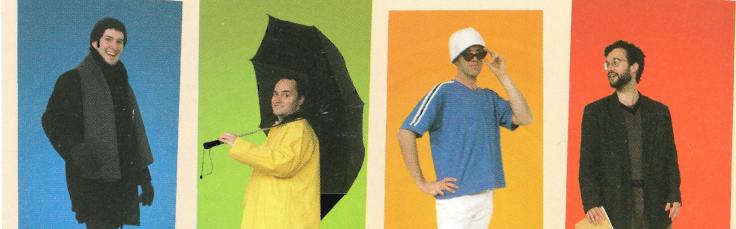
cropped-seasons-600.jpgYou heard right. After many orchestra-free years, the universe will once again be subject to the dulcet tones of the full Viper and His Famous Orchestra band: Riley Broach, Ryan Jerving, Edward Burch, and Rob Henn, representing four cities and three states. But most of all representing downstate Illinois.

We have at least 5 shows set up at the moment, the most public of which are the following:

  • Sunday, July 12, at the Great Performers of Illinois Festival 2009, at Millennium Park (stage T.B.A.), 201 E. Randolph St., Chicago, Illinois, 12:00 noon – 3:00 p.m. The show is free and will feature a special set from Edward Burch, flown in like a secessionist lobster from Texas. For more, see the event announcement the event announcement on the Millennium Park site
  • Friday, August 7, 2009, Mike ‘N Molly’s , 105 N Market St., Champaign, Illinois, 8:00 p.m. – 11:00 p.m.
    See Mike ‘N Molly’s
  • Friday, August 9, 2009, Mike ‘N Molly’s, special matinee show, 4:00 p.m. – 7:00 p.m. You know, for kids.

It looks like the July show, and likely the August shows, will feature an expanded version of the orchestra, with Tangleweed’s Kip Rainey and Rectangle’s Victor Cortez filling out the sound. Other special guests have been promised and will be delivered. Let’s hear it for all the great performers of Illinois.

And there will be new material! So if you’ve worn out your copies of Everything for Everyone and A Song for All Seasons, take heart.

the kind of music your great-great-great-grandparents warned your great-great-grandparents about